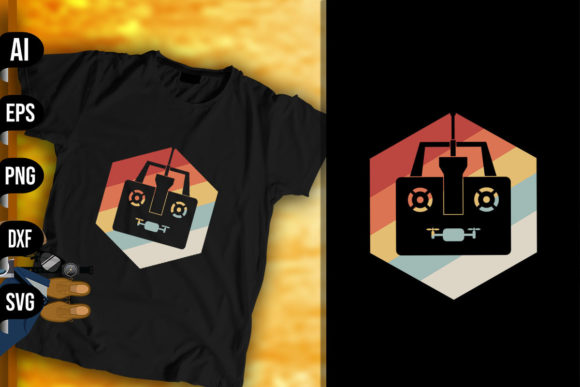
Retro Drone Remote Control
As an embroidery designer and product reviewer, I often find myself evaluating digital designs for their practicality, visual appeal, and suitability for real-world use. The Retro Drone Remote Control design caught my attention not just for its nostalgic aesthetic, but for how it could translate into a variety of handmade and commercial projects. Let’s dive into what this print-ready design offers and where it truly shines.
First Impressions: A Nostalgic Visual with Practical Potential
The Retro Drone Remote Control design exudes a vintage vibe that feels both familiar and modern. Its clean lines, bold shapes, and retro color palette make it instantly recognizable as something from the past—yet it’s styled in a way that feels versatile enough for today’s creative markets. The layout is well-balanced, with a central focus on the drone remote control itself, surrounded by subtle design elements that add depth without overwhelming the eye.
This design would fit naturally into custom apparel, especially for those looking to create a unique look for t-shirts, sweatshirts, or tote bags. It also has potential for baby items, like onesies or nursery decor, where the retro theme can be both charming and timeless. The detail level is moderate, making it suitable for most embroidery machines and stitch types, though it does require some attention to ensure clarity when stitched onto fabric.
Real-World Embroidery Performance
When considering how the Retro Drone Remote Control will perform in actual embroidery projects, there are a few key factors to keep in mind. First, the design is best suited for flat surfaces—think t-shirts, tote bags, or aprons. It may not be ideal for curved areas like caps or hats, where the shape might distort slightly during stitching.
For custom apparel, the design works well on medium-weight fabrics. However, on thin or stretchy materials, you’ll want to use a proper stabilizer to prevent puckering or distortion. The stitch density is reasonable, so it should work fine on most standard hoop sizes, but if you’re working with smaller hoops, you may need to break the design into sections.
One area where the Retro Drone Remote Control could use extra care is on dark fabrics. While the design is visible, the contrast might not be as strong as on lighter backgrounds. If you’re planning to use it on a black or navy shirt, consider adjusting the thread colors or using a white underlay to enhance visibility.
Where to Use It Carefully
While the Retro Drone Remote Control is a solid design, there are certain situations where it might not perform as expected. For instance, on textured fabrics like fleece or knits, the design might lose some definition. Similarly, if you're working on a layered garment or a product that requires frequent washing, the stitches could become less crisp over time.
Small hoop sizes can also be a challenge. If your machine doesn’t support larger hoops, you may need to split the design into parts, which can complicate the process. Additionally, the corners of the design are somewhat detailed, so they might not hold up as well on tight curves or intricate shapes.
For baby items, the design is safe, but you’ll want to avoid any small lettering or delicate details that could be lost in the stitching. It’s always a good idea to test the design on scrap fabric before committing to a final project.
Impact on Visual Appeal and Customer Perception
When it comes to visual appeal, the Retro Drone Remote Control design adds a unique touch that can elevate a handmade product or commercial item. Its retro feel makes it stand out in a market saturated with generic graphics, and it can help differentiate your offerings from the competition.
Stitching clarity is generally good, but it depends on how well the design is scaled and how the stitch types are applied. Satin stitch and fill stitch work well for the main elements, while running stitch can add texture to certain areas. Proper thread color contrast is essential, especially when using the design on dark fabrics.
From a customer perspective, the Retro Drone Remote Control can increase the perceived value of a product. It gives a sense of craftsmanship and intentionality, which is crucial for handmade or personalized gifts. When used on items like tote bags or sweatshirts, it can also boost brand consistency and recognition, especially for craft businesses or Etsy sellers.
Practical Designer Notes
Before jumping into a full project, I recommend testing the Retro Drone Remote Control on a scrap piece of fabric. This allows you to see how the design looks when stitched and whether it meets your expectations. Pay close attention to the stitch density and how it interacts with the fabric texture.
If you’re using the design for commercial purposes, make sure to check the licensing terms. Even though the product description mentions it’s print-ready for many uses, it’s always wise to confirm whether it’s suitable for resale or if there are any restrictions.
For printable mockups, the Retro Drone Remote Control can be a great asset. It’s easy to incorporate into digital product previews, and its clean layout makes it adaptable for various marketing materials. Whether you’re creating a digital embroidery file for sale or preparing a sample for a client, this design offers flexibility and style.
Final Thoughts: A Versatile Design with Room for Growth
The Retro Drone Remote Control is a solid choice for embroidery designers and small business owners looking for a nostalgic yet modern graphic. It has the potential to work across multiple mediums and applications, from custom apparel to personalized gifts. However, its success ultimately depends on how well it’s adapted to the specific project and fabric type.
For those who appreciate thoughtful design and practical application, this print-ready template offers a great starting point. Just remember to test it thoroughly, consider the limitations, and tailor it to your needs. With the right approach, the Retro Drone Remote Control can become a valuable addition to your design arsenal.